
No time for the gym? Think exercise must be 30 to 60 minutes long to be effective? Research suggests that very short bursts of movement performed throughout the day can improve health and fitness.
Exercise snacks are short bouts of physical activity performed throughout the day, usually lasting anywhere from 30 seconds to 10 minutes. They have gained popularity because they offer a practical solution for people who want to be more active but struggle to find large blocks of time for exercise.
In this article, you will learn what exercise snacks are, why they were created, what research has shown about their benefits, examples you can start using today and some common myths surrounding the concept.
What Are Exercise Snacks?
Exercise snacks are brief periods of physical activity performed several times throughout the day instead of completing one long workout session.
Traditionally, exercise is often viewed as a dedicated activity that requires setting aside a specific amount of time. For example, someone might go for a 30-minute walk, attend a 60-minute gym session or complete an hour-long cycling workout. While these approaches are effective, they can be difficult to fit into a busy schedule.
Exercise snacks take a different approach. Instead of one long session, movement is spread throughout the day in small chunks. Examples include climbing stairs for two minutes, walking for five minutes after lunch or performing ten bodyweight squats every hour or two.
The key characteristics of exercise snacks are that they are short, convenient and repeated throughout the day. Just as healthy snacks provide nutrition between meals, exercise snacks provide movement between long periods of sitting.
Why Were Exercise Snacks Created?
Modern life is increasingly sedentary. Many people spend large portions of their day sitting at a desk, driving to work, watching television or using smartphones. As technology has made life more convenient, physical activity has gradually become less necessary in everyday life.
At the same time, many people struggle to meet recommended exercise guidelines. One of the most common reasons given is a lack of time. Long working hours, traffic congestion, family commitments and household responsibilities often leave little energy for a traditional workout.
Some people also believe that exercise only “counts” if it involves sweating heavily in a gym for an hour. This belief can make exercise seem intimidating and overwhelming. Others fall into the classic “I’ll start Monday” mindset. They know they should exercise, but they keep postponing it until a more convenient time.
You could say many people take a “mañana mañana” approach to exercise, constantly telling themselves they will start tomorrow.
Researchers began asking an important question: What if exercise did not have to be performed in one long session? Could multiple short bouts of activity spread throughout the day provide meaningful benefits?
This question eventually led to the development of the exercise snack concept.
What Does the Research Say?
Exercise Snacks Improve Cardiovascular Fitness
A recent systematic review and meta-analysis by Chen et al. (2025) found that exercise snacks can improve cardiometabolic health and physical fitness outcomes. Cardiovascular fitness refers to the ability of the heart and lungs to deliver oxygen to working muscles during physical activity. Traditionally, improving cardiovascular fitness has been associated with activities such as jogging, swimming or cycling for extended periods.
However, research has shown that short bouts of activity performed multiple times throughout the day can also improve aerobic fitness. Several studies have investigated stair climbing as a form of exercise snack. Participants performed short periods of stair climbing lasting only one or two minutes several times per day. After several weeks, improvements in aerobic fitness were observed.
Although a single two-minute session may not seem impressive, the body responds to repeated challenges over time. Every exercise snack slightly elevates the heart rate and places a small demand on the cardiovascular system. These small demands accumulate and can contribute to meaningful improvements in fitness when performed consistently.
Exercise Snacks Help Regulate Blood Sugar
According to Chen et al. (2025) exercise snacks may improve several cardiometabolic health outcomes, including blood sugar regulation, particularly when short bouts of activity are performed regularly throughout the day. Wang et al. (2025) also highlighted the potential of exercise snacks as a practical strategy for improving physical fitness among sedentary individuals.
After eating, blood glucose levels naturally rise. When people remain seated for long periods after meals, blood sugar levels may stay elevated for longer than necessary. Over time, this may negatively affect metabolic health.
Research suggests that short bouts of movement after meals can help reduce post-meal blood sugar spikes. Activities such as walking, stair climbing or light bodyweight exercises encourage muscles to use glucose as a source of energy. This helps remove glucose from the bloodstream more efficiently.
One of the easiest ways to apply this research is by taking a short walk after meals. Even five to ten minutes of walking after lunch or dinner may help support healthier blood sugar levels while adding more movement to your day.
Exercise Snacks May Improve Energy and Mood
A systematic review by Alexe et al. (2025) reported that exercise snacks are a feasible strategy for interrupting sedentary behaviour and may contribute to improvements in wellbeing, energy levels and overall health.
Have you ever noticed feeling sluggish after sitting for several hours? Long periods of inactivity can reduce alertness and leave people feeling mentally drained. Exercise snacks provide an opportunity to break this cycle.
Short bursts of movement increase blood flow, stimulate the nervous system and help people feel more awake. Many individuals report improved concentration and productivity after taking a brief walking break or performing a few simple exercises.
Exercise may also improve mood by stimulating the release of endorphins and other chemicals associated with positive emotions. As a result, exercise snacks may help reduce feelings of fatigue while increasing focus and motivation throughout the day.
Benefits of Exercise Snacks
Research suggests that exercise snacks may:
- Improve cardiovascular fitness
- Support blood sugar control
- Reduce sedentary behaviour
- Increase daily physical activity
- Improve energy levels
- Enhance concentration and mood
- Require very little time
Examples of Exercise Snacks
One reason exercise snacks have become popular is that they can be performed almost anywhere.
At home, exercise snacks may include ten bodyweight squats, ten push-ups, marching in place for two minutes or climbing stairs.
At work, people can walk around the office, take the stairs instead of the elevator, perform desk squats or hold walking meetings.
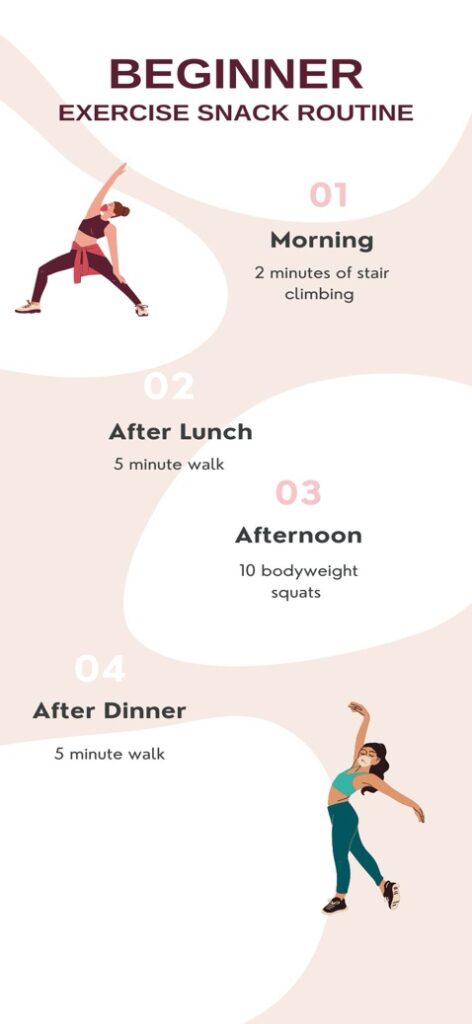
After meals, a five to ten minute walk is one of the simplest and most effective exercise snacks. Research suggests that walking after meals may help improve blood sugar control and reduce prolonged sitting time. If you would like to learn more, you can also read our guide on the benefits of walking after meals. Light stair climbing or easy cycling can also be useful options. For beginners, a daily exercise snack routine might look something like this:
Start the morning with two minutes of stair climbing. After lunch, take a five minute walk. During the afternoon, perform ten bodyweight squats after a long period of sitting. In the evening, finish with another five minute walk.
In total, this routine requires only around fifteen minutes spread throughout the entire day.
Who Should Try Exercise Snacks?
Exercise snacks can benefit almost anyone, but they may be especially useful for certain groups.
Office workers who spend most of their day sitting can use exercise snacks to break up prolonged periods of inactivity. Students who spend hours studying may find that short movement breaks improve concentration and reduce mental fatigue.
Parents with busy schedules often struggle to find time for structured workouts. Exercise snacks provide a practical alternative that can be incorporated into daily routines. Older adults may also benefit because many exercise snacks can be performed at a comfortable intensity and require little equipment.
Perhaps most importantly, exercise snacks are ideal for beginners who dislike gyms or feel intimidated by traditional exercise environments. Because they are simple and accessible, exercise snacks can help build confidence and create positive exercise habits.
How to Start Today
The easiest way to begin is to start small.
Instead of aiming for ten exercise snacks per day, start with one. For example, perform ten squats after lunch or take a five minute walk after dinner.
Next, link exercise snacks to habits you already perform. This strategy, often called habit stacking, makes new behaviours easier to remember. Every time you finish a meal, stand up and walk for five minutes. Every time you make a cup of coffee, perform a short set of bodyweight exercises.
Using reminders can also be helpful. Smartphone notifications, smartwatches and calendar reminders can all encourage movement throughout the day.
Most importantly, focus on consistency rather than perfection. Three minutes of activity every day for a month adds up to ninety minutes of movement. Small actions performed consistently often produce greater results than ambitious plans that are quickly abandoned.
Are Exercise Snacks Enough?
Although exercise snacks offer many benefits, they should not be viewed as a complete replacement for exercise.
Exercise snacks are an excellent way to increase daily movement, reduce sedentary behaviour and improve certain aspects of health. However, they cannot fully replace activities such as strength training, sports participation or longer aerobic exercise sessions.
Think of exercise snacks as a gateway to a more active lifestyle rather than a substitute for exercise altogether. They are especially valuable for people who currently do little or no exercise because even small increases in activity can produce meaningful health benefits.
Common Myths About Exercise Snacks
One common myth is that exercise snacks are too short to matter. Research suggests otherwise. Even brief bouts of activity can contribute to improvements in health and fitness when performed consistently.
Another myth is that you must sweat for exercise to be effective. While high-intensity exercise has benefits, many exercise snacks involve light to moderate intensity activities that still provide health benefits.
A third myth is that exercise snacks replace all other forms of exercise. In reality, exercise snacks are best viewed as a complement to an active lifestyle rather than a complete replacement.
Conclusion
Think of exercise snacks like saving money. Depositing RM1 into a bank account may not seem significant, but small deposits made consistently can grow over time. Exercise works in much the same way.
A few minutes of movement may not feel important today, but repeated day after day, week after week and month after month, those small actions can have a meaningful impact on health.
Exercise snacks are short bursts of movement designed to help busy people become more active. Research suggests they can improve fitness, support blood sugar control, reduce sedentary behaviour and boost energy levels. Best of all, they require very little time and can be performed almost anywhere.
Now that you have reached the end of this article, why not try one exercise snack today? Take a five minute walk after your next meal or perform ten squats after sitting for a couple of hours. Your future self may thank you for it.
Frequently Asked Questions About Exercise Snacks
Are Exercise Snacks Effective?
Yes. Research suggests that exercise snacks can provide meaningful health benefits, particularly for individuals who are currently inactive. Short bouts of physical activity performed throughout the day have been shown to improve cardiovascular fitness, support blood sugar regulation and reduce sedentary behaviour. While a two-minute walk may not seem significant, the cumulative effect of multiple exercise snacks performed consistently can contribute to better overall health.
How Long Should an Exercise Snack Be?
There is no single ideal duration for an exercise snack. Most exercise snacks last anywhere from 30 seconds to 10 minutes. The key is that the activity is brief and easy to fit into your day. For beginners, even one or two minutes of movement can be a great starting point. As with many health habits, consistency is often more important than duration.
Can Exercise Snacks Replace the Gym?
Not entirely. Exercise snacks are a useful way to increase daily movement and reduce prolonged sitting, but they should not be viewed as a complete replacement for structured exercise. Activities such as strength training, sports participation and longer aerobic workouts provide additional benefits that exercise snacks alone may not offer. However, for someone who currently performs little or no exercise, exercise snacks are far better than remaining inactive.
How Many Exercise Snacks Should I Do Per Day?
There is no specific number that everyone must follow. Some people may benefit from one or two exercise snacks per day, while others may perform several throughout the day. A practical starting point is to aim for one exercise snack after each meal or after every few hours of sitting. The best number is ultimately the one that fits comfortably into your routine and can be maintained consistently.
What Is the Best Type of Exercise Snack?
The best exercise snack is the one that you will actually do consistently. Walking, stair climbing, bodyweight squats, push-ups, lunges and cycling are all excellent options. Rather than searching for the perfect exercise snack, focus on choosing activities that are convenient, enjoyable and appropriate for your fitness level.
Are Exercise Snacks Good for Weight Loss?
Exercise snacks can contribute to weight management by increasing daily energy expenditure and encouraging a more active lifestyle. However, weight loss is influenced by many factors including nutrition, sleep and overall physical activity levels. Exercise snacks should be viewed as one useful tool within a broader healthy lifestyle rather than a standalone weight loss solution.
Ready to Make Walking Part of Your Workday?
Reading about walking habits is useful. Building one into a real workweek is the next step.
The 7-Day Desk Worker Reset gives you a simple seven-day action plan for doing exactly that. You’ll create a walking trigger, break up long periods of sitting, add small movement snacks, try beginner mobility and strength, and build a personal movement system based on what actually fits your life.
You don’t need a gym, exercise equipment or long workouts.
👉 Start the 7-Day Desk Worker Reset for $5
Not ready to buy? Download the Free Healthy Living Starter Kit for a free introduction to moving more and building healthier everyday habits.
Alexe, D. I., Saha, S., Choudhary, P. K., Alexe, C. I., Choudhary, S., & Tohănean, D. I. (2025). Exercise Snacks as a Strategy to Interrupt Sedentary Behavior: A Systematic Review of Health Outcomes and Feasibility. Healthcare (Basel), 13(24). https://doi.org/10.3390/healthcare13243216
Chen, J., Lu, Y., Zhao, H., Liu, H., & Yao, J. (2025). The effectiveness of exercise snacks as a time-efficient treatment for improving cardiometabolic health in adults: a systematic review and meta-analysis. Front Cardiovasc Med, 12, 1643153. https://doi.org/10.3389/fcvm.2025.1643153
Wang, T., Laher, I., & Li, S. (2025). Exercise snacks and physical fitness in sedentary populations. Sports Medicine and Health Science, 7(1), 1-7. https://doi.org/https://doi.org/10.1016/j.smhs.2024.02.006
Related Articles