Introduction
Would you like to strengthen your legs without using gym equipment? Are you looking for a beginner-friendly exercise that you can do almost anywhere? Or perhaps you’ve heard about squats but aren’t sure how to perform them correctly.
If so, bodyweight squats are an excellent place to start.
Bodyweight squats are one of the most common beginner strength exercises because they use your own body weight as resistance. They require no equipment, can be performed at home and help you practise an important movement that you already use in everyday life.
Think about how many times you sit down and stand up during the day. Whether you’re getting out of a chair, picking something up from the floor or climbing stairs, your lower-body muscles work together to help you move.
Learning to perform bodyweight squats with good technique can help you build strength and confidence before progressing to more advanced exercises.
In this article, you’ll learn what a bodyweight squat is, why it’s beneficial for beginners and how to perform the movement safely and correctly.
If you’re completely new to strength training, our article Bodyweight Exercises for Beginners: A Simple Guide to Building Strength Without Equipment provides a helpful introduction to beginner-friendly exercises.
What Is a Bodyweight Squat?
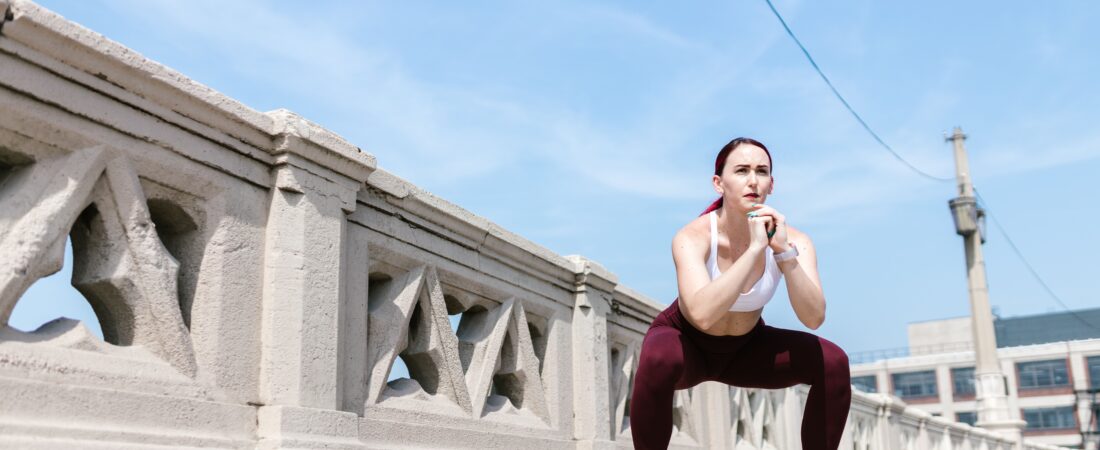
A bodyweight squat is a lower-body strength exercise that involves bending your hips and knees before returning to a standing position.
Unlike weighted squats, bodyweight squats use only your own body weight as resistance.
This makes them an accessible exercise for many beginners because no equipment is required.
Although the movement appears simple, it involves several muscles working together to help control your body as you lower yourself and stand back up.
Because squats closely resemble movements used during everyday activities, they are often included in beginner exercise programmes.
Learning this movement with good technique helps create a solid foundation before progressing to more challenging strength exercises.
Benefits of Bodyweight Squats
1. Strengthen Your Lower Body
Bodyweight squats primarily strengthen the muscles in your lower body.
These include the muscles around your thighs, hips and buttocks, which work together to help you lower and raise your body during the exercise.
Developing strength in these muscles can make everyday movements feel easier over time.
2. Support Everyday Activities
One reason bodyweight squats are so valuable is that they mimic movements people perform every day.
For example, similar movement patterns are used when you:
- Sit down in a chair.
- Stand up from a chair.
- Pick up objects from the floor.
- Climb stairs.
- Get in and out of a car.
Practising bodyweight squats can help beginners become more confident performing these everyday activities.
3. Require No Equipment
One of the biggest advantages of bodyweight squats is their convenience.
You don’t need:
- A gym membership.
- Dumbbells.
- Exercise machines.
- Large workout spaces.
All you need is enough room to move comfortably.
Because of this, bodyweight squats fit well into home workouts and busy schedules.
4. Suitable for Beginners
Many beginners feel nervous about starting strength training.
Bodyweight squats provide a simple starting point because the movement can be adjusted to suit different abilities.
For example, beginners who find full squats challenging can begin with partial squats or practise standing up from a sturdy chair before progressing to deeper squats.
This gradual approach helps build confidence while allowing you to learn proper technique.
5. Easy to Progress
As your strength and confidence improve, bodyweight squats can continue to challenge you.
For example, you might gradually:
- Increase the number of repetitions.
- Slow down the movement.
- Improve your squat depth.
- Progress to more advanced squat variations.
Starting with bodyweight squats provides a strong foundation before introducing additional resistance in the future.
How to Do a Bodyweight Squat
Follow these simple steps to perform a basic bodyweight squat.
Step 1: Stand Comfortably
Stand with your feet approximately shoulder-width apart.
Allow your toes to point forward or slightly outward if that feels more comfortable.
Relax your shoulders and keep your head facing forward.
Step 2: Brace Your Body
Before you begin the movement, gently tighten your stomach muscles and keep your chest lifted.
This helps you maintain good posture throughout the exercise.
Avoid holding your breath.
Instead, breathe naturally as you move.
Step 3: Push Your Hips Back
Begin the movement by pushing your hips slightly backwards, as though you’re preparing to sit down on a chair behind you.
At the same time, bend your knees in a controlled manner.
Keep the movement smooth rather than rushing down.
Step 4: Lower Yourself Comfortably
Continue lowering yourself until you reach a comfortable depth.
Not everyone needs to squat to the same depth.
Factors such as mobility, flexibility and previous experience can all influence how far someone is able to squat comfortably.
The goal is to move within a comfortable range while maintaining good control throughout the movement.
Step 5: Keep Your Heels on the Floor
As you lower yourself, try to keep both heels in contact with the floor.
Lifting your heels may reduce your stability and make the movement more difficult to control.
If keeping your heels down feels challenging, reduce the depth of your squat or use a sturdy chair for support while you continue practising.
Step 6: Return to Standing
Push through your feet and slowly straighten your hips and knees to return to the starting position.
Avoid rushing this part of the movement.
A slow, controlled return helps you maintain good technique throughout the exercise.
Repeat the movement while keeping your breathing relaxed and your posture upright.
Common Mistakes
Allowing Your Knees to Collapse Inward
As you squat, try to keep your knees moving in the same general direction as your toes.
Allowing your knees to collapse inward may reduce stability and make the movement feel less controlled.
Rounding Your Back
Some beginners round their upper or lower back while squatting.
Instead, try to keep your chest lifted and your back in a comfortable, neutral position throughout the movement.
Lifting Your Heels
Your heels should remain in contact with the floor during the squat whenever possible.
If your heels lift, try reducing your squat depth or practising with support until your movement becomes more comfortable.
Looking Down
Looking directly at the floor may encourage your upper body to lean forward.
Instead, keep your eyes looking ahead at a comfortable point in front of you.
Moving Too Quickly
Squats are not about speed.
Moving slowly gives you more control and allows you to focus on good technique.
Easier Modifications
Everyone starts at a different fitness level.
If a full bodyweight squat feels difficult, that’s perfectly normal.
Here are a few beginner-friendly options.
Chair Squats (Sit-to-Stand)
Sit on a sturdy chair with your feet flat on the floor.
Lean slightly forward and stand up using your legs before slowly sitting back down.
This movement helps you practise the squat pattern with additional support.
We’ll cover this exercise in more detail in our article Chair Exercises for Beginners.
Partial Squats
Instead of lowering into a full squat, simply bend your hips and knees a small amount before returning to standing.
As your confidence improves, you can gradually increase your range of motion.
Hold Onto a Stable Support
If balance is your biggest challenge, lightly hold onto a sturdy chair, countertop or railing while practising the movement.
The support can help you focus on learning proper technique without worrying about losing your balance.
How Often Should Beginners Do Bodyweight Squats?
For many beginners, including bodyweight squats in a routine two to three times per week is a practical place to start.
Rather than performing a large number of repetitions, focus on learning the movement correctly.
As your confidence improves, you can gradually increase the number of repetitions or include squats as part of a longer beginner strength routine.
Remember, consistency is usually more important than doing a high number of squats in one session.
Our article How to Make Healthy Habits Last: 10 Simple Strategies That Work explains how building small, consistent habits often leads to better long-term results.
Frequently Asked Questions
Are bodyweight squats good for beginners?
Yes.
Bodyweight squats are one of the most beginner-friendly strength exercises because they require no equipment and can be modified to suit different fitness levels.
How many bodyweight squats should beginners do?
There is no single number that suits everyone.
Start with a comfortable number of repetitions while focusing on good technique, then gradually increase as your confidence improves.
Why can’t I squat very low?
Everyone has different levels of mobility, flexibility and strength.
It’s perfectly acceptable to squat only as far as feels comfortable while maintaining good control.
Your range of motion may improve with regular practice.
Should my knees go past my toes?
During a natural squat, some people’s knees may move past their toes depending on factors such as body proportions and squat depth.
Rather than focusing on one body position, aim to perform the movement in a controlled and comfortable manner.
Can I do bodyweight squats every day?
Some people include bodyweight squats in their daily movement routine, while others perform them a few times each week as part of a strength programme.
If you’re new to exercise, allow yourself enough time to recover and focus on building a routine that you can maintain consistently.
Conclusion
Bodyweight squats are one of the most effective beginner exercises for building lower-body strength and improving everyday movement.
They require no equipment, can be performed almost anywhere and provide an excellent foundation before progressing to more advanced strength exercises.
Remember, your goal isn’t to perform the deepest squat or complete the most repetitions.
Instead, focus on learning good technique, moving with control and practising consistently.
Over time, those small improvements can help build both strength and confidence.
When you’re ready to expand your routine, explore our guides on Wall Push-Ups for Beginners, Glute Bridges for Beginners and Lunges for Beginners to continue building a strong foundation.