Introduction
Would you like to improve your balance and feel more confident during everyday activities? Looking for simple exercises that you can do at home without special equipment? Or perhaps you’re new to exercise and want to build a strong foundation before trying more challenging movements.
If so, balance exercises are an excellent place to start.
Balance is an important part of everyday life. Whether you’re walking, climbing stairs, stepping over obstacles or reaching for something on a high shelf, your body constantly works to keep you stable.
Like strength and flexibility, balance can be practised and improved over time.
The good news is that you don’t need complicated equipment or advanced workouts to begin.
Simple balance exercises performed consistently can help you develop better body control while building confidence with everyday movement.
In this article, you’ll learn what balance exercises are, why they’re important and eight beginner-friendly exercises you can perform safely at home.
If you’re just beginning your fitness journey, our article Bodyweight Exercises for Beginners: A Simple Guide to Building Strength Without Equipment provides an excellent starting point before adding balance-specific exercises.
What Are Balance Exercises?
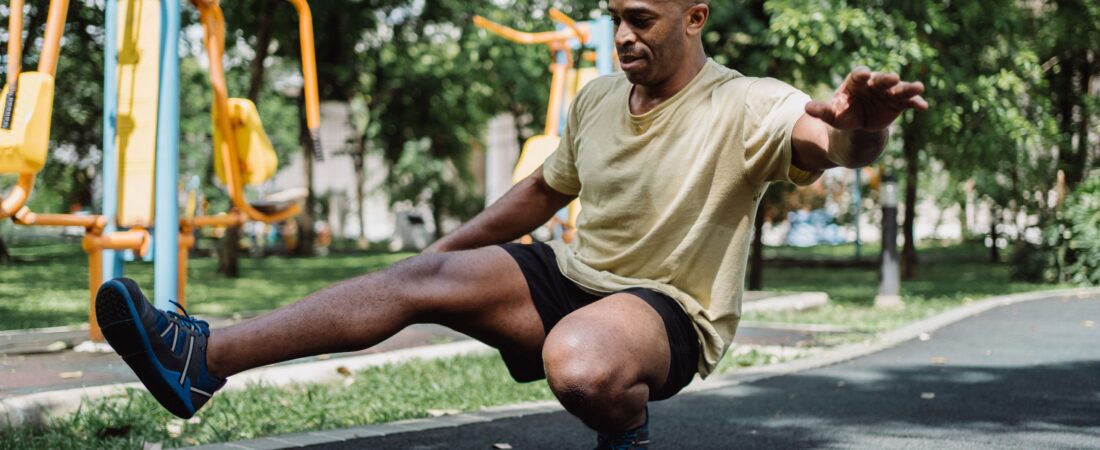
Balance exercises are movements that help you practise controlling your body while maintaining stability.
Some exercises involve standing on one leg, while others challenge your balance by changing your body position or shifting your weight.
Rather than focusing only on one part of the body, balance exercises encourage several muscles to work together while your brain and body coordinate movement.
Many beginner balance exercises require little or no equipment, making them easy to perform at home.
As your confidence improves, you can gradually increase the challenge by reducing support or trying more advanced movements.
Benefits of Balance Exercises
1. Improve Stability
Balance exercises help your body practise maintaining stability during movement.
Improving balance can make everyday activities such as walking, turning and changing direction feel more controlled.
2. Build Confidence
Many beginners feel unsure when trying new exercises.
Practising simple balance exercises in a safe environment can help increase confidence while encouraging regular movement.
As your balance improves, you may feel more comfortable performing other strength exercises.
3. Support Everyday Activities
Good balance is useful during many daily tasks.
For example, balance helps when you:
- Climb stairs.
- Walk on uneven ground.
- Step over objects.
- Put on your shoes while standing.
- Get in and out of a car.
Practising balance exercises may help you perform these activities with greater confidence.
4. Complement Strength Training
Balance and strength work well together.
Exercises such as squats, lunges and glute bridges all require your body to maintain stability while moving.
Developing balance alongside strength can help you perform these exercises with better control.
5. Require Little or No Equipment
Most beginner balance exercises only require enough space to move safely.
A sturdy chair or wall can provide additional support while you’re learning new movements.
This makes balance training accessible for beginners exercising at home.
8 Beginner Balance Exercises
Here are eight simple balance exercises suitable for beginners.
1. Single-Leg Stand
Stand beside a sturdy chair or wall.
Lift one foot slightly off the floor while balancing on the other leg.
Hold the position for a comfortable amount of time before changing sides.
If needed, lightly hold the chair or wall for support.
2. Heel-to-Toe Walk
Stand upright and slowly walk in a straight line.
Place the heel of one foot directly in front of the toes of the opposite foot with each step.
Move slowly while focusing on maintaining your balance.
3. Standing March
Stand tall with good posture.
Slowly lift one knee toward your chest before lowering it and repeating with the opposite leg.
Focus on maintaining balance throughout the movement.
4. Supported Single-Leg Balance
Stand behind a sturdy chair and lightly hold the backrest.
Lift one foot off the floor while maintaining your balance on the opposite leg.
As your confidence improves, gradually reduce the amount of support you use from the chair.
This exercise provides a safe way to practise balancing while building confidence.
5. Side Leg Raises
Stand beside a sturdy chair or wall for support.
Slowly lift one leg out to the side while keeping your upper body upright.
Lower your leg with control before repeating on the opposite side.
This exercise helps strengthen the muscles around your hips while encouraging balance during standing movements.
6. Chair Sit-to-Stand
Sit on a sturdy chair with your feet flat on the floor.
Lean slightly forward and stand up using your legs before slowly sitting back down with control.
Although this is primarily a strength exercise, it also helps improve balance as you transition between sitting and standing.
Our guide Chair Exercises for Beginners explains this movement in more detail.
7. Forward Lunges
Stand upright and take a comfortable step forward with one foot.
Slowly lower your body by bending both knees before pushing through your front foot to return to the starting position.
Lunges challenge your balance because they require you to control your body while moving between different positions.
For step-by-step instructions, see our article Lunges for Beginners.
8. Bird Dog
Begin on your hands and knees with your hands below your shoulders and your knees below your hips.
Slowly extend one arm forward while extending the opposite leg behind you.
Pause briefly before returning to the starting position and repeating on the other side.
The bird dog helps improve coordination, balance and core stability while requiring little or no equipment.
How Often Should Beginners Practise Balance Exercises?
For many beginners, practising balance exercises two to three times per week is a practical starting point.
You don’t need long training sessions.
Even a few minutes of balance practice can become a valuable part of your regular exercise routine.
As your confidence improves, you can gradually increase the difficulty by reducing support or trying more challenging variations.
The key is to focus on quality rather than rushing through the exercises.
Common Mistakes
Looking Down at Your Feet
Many beginners constantly look down while balancing.
Instead, try looking at a fixed point in front of you.
This often makes it easier to maintain your balance.
Moving Too Quickly
Balance exercises should be performed slowly and with control.
Rushing through the movements can make them more difficult and reduce your ability to maintain stability.
Skipping Support When You Need It
Using a chair or wall while learning balance exercises is completely normal.
As your confidence improves, you can gradually rely less on the support.
Becoming Frustrated
Improving balance takes time and practice.
It’s normal to wobble or lose your balance occasionally, especially when learning a new exercise.
Focus on gradual improvement rather than expecting perfect balance immediately.
Frequently Asked Questions
Are balance exercises good for beginners?
Yes.
Many balance exercises are suitable for beginners because they require little or no equipment and can easily be modified by using a chair or wall for support.
How often should I practise balance exercises?
Many beginners include balance exercises two or three times each week as part of a balanced exercise routine.
Do I need equipment?
No.
Most beginner balance exercises require no equipment.
A sturdy chair or wall may provide additional support while you’re learning.
Why do I lose my balance so easily?
Balance depends on several factors, including strength, coordination and experience.
Like any other skill, balance usually improves with regular practice.
Can I practise balance every day?
Yes.
Many beginner balance exercises are gentle enough to be practised regularly, provided you perform them safely and within your comfort level.
Conclusion
Balance exercises are a simple and effective way for beginners to improve stability, coordination and confidence.
They require little or no equipment, can be performed at home and complement many other strength exercises.
Remember, better balance develops gradually through regular practice.
Start with simple exercises, use support whenever needed and focus on moving with control.
If you’re considering adding equipment to your balance training in the future, checkout choosing the best balance pads for beginners to help you understand when they may be useful.
To continue building your beginner strength routine, explore our guides on Bodyweight Squats for Beginners, Glute Bridges for Beginners, Lunges for Beginners and Beginner Core Exercises.